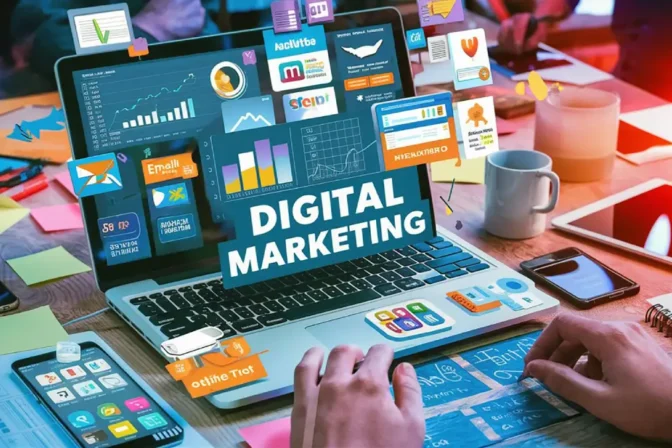
Attracting new customers is only one part of building a successful online business. Companies also need to understand how people discover their brand, what influences purchasing decisions, and why some visitors leave without taking action. An effective digital marketing strategy connects these different stages through coordinated campaigns, useful content, reliable analytics, and customer-focused experiences. Instead of treating every online platform as a separate opportunity, businesses can build a connected system that supports brand awareness, customer acquisition, and long-term relationships.
Creating this system requires a balance between organic visibility, paid advertising, and website functionality. Businesses can use seo to improve their presence in organic search results, google ads to reach relevant audiences through paid campaigns, and professional shopify development to create more effective online shopping experiences. The key is understanding how these elements contribute to the customer journey and how their performance can be evaluated without relying on assumptions or unrealistic promises.
Why Digital Marketing Needs a Customer-Centered Approach
Traditional marketing plans often begin by selecting advertising channels and deciding how much money to spend on each one. However, a more effective approach starts with understanding the customer.
digital marketing should be designed around the questions people ask, the problems they want to solve, and the information they need before making a decision.
For example, a business selling commercial coffee machines may serve restaurant owners, hotel purchasing managers, and independent coffee shop operators. Although all three groups may be interested in similar equipment, their requirements can differ considerably.
A restaurant may prioritize reliability during busy service periods, while a hotel may focus on capacity and maintenance arrangements. A small coffee shop may be particularly interested in available space, equipment functionality, and initial investment requirements.
Understanding these differences allows businesses to develop more relevant marketing messages and website content.
Building a Digital Marketing Funnel That Supports Real Decisions
A marketing funnel describes the different stages customers may experience before completing a desired action. Although real customer journeys are not always linear, this framework can help businesses organize communication and content.
Awareness: Helping Customers Discover Your Brand
At the awareness stage, potential customers may not be familiar with a business or its products. They may be researching a general problem or exploring possible solutions.
Educational articles, informative videos, relevant social content, and advertising campaigns can introduce the business to interested audiences.
For example, a company offering workplace management software might publish a guide explaining common scheduling challenges for growing teams.
The purpose of this content is to answer a useful question while introducing the company’s area of expertise.
Consideration: Supporting Product and Service Comparisons
Once customers understand their needs, they may begin comparing providers, products, or approaches.
Comparison guides, product specifications, service explanations, and practical examples can support this stage.
A business should provide transparent information about important features, relevant limitations, and purchasing considerations.
Unsubstantiated superiority claims are less useful than clear explanations of how a solution works and when it may be appropriate.
Conversion: Making the Next Step Clear
When users are prepared to take action, the website should make the process understandable and convenient.
Depending on the business, the desired action may involve completing a purchase, booking a demonstration, requesting a quotation, or contacting a sales representative.
Calls to action should accurately describe what happens next.
Forms, purchasing options, and contact information should also work reliably across common devices.
Retention: Continuing the Customer Relationship
The customer journey does not necessarily end after the initial purchase.
Order updates, helpful product guidance, customer service, and relevant follow-up communication can improve the post-purchase experience.
Retention activities should respect customer preferences, applicable privacy requirements, and marketing communication rules.
A customer-centered digital marketing approach considers these interactions alongside new customer acquisition.
How to Choose the Right Marketing Channels for Your Business
Businesses do not need to maintain an active presence on every available digital platform.
Channel selection should depend on customer behavior, business objectives, available resources, and the type of products or services offered.
Organic Search for Research-Driven Customers
Search engines can connect businesses with users actively researching relevant topics.
seo focuses on improving website accessibility, content relevance, and organic search performance.
For businesses selling specialized products or professional services, detailed content can help customers understand complex purchasing decisions.
For example, an industrial equipment supplier may publish technical guides and product comparisons to answer questions that arise before customers request quotations.
Organic optimization requires ongoing work and does not guarantee particular rankings or traffic increases.
Paid Search for Defined Advertising Objectives
Paid search can help businesses reach relevant users through advertising placements.
google ads provides campaign options for objectives such as website traffic, lead generation, and online sales, depending on campaign eligibility and configuration.
Advertising campaigns should connect relevant targeting with accurate messaging and suitable landing pages.
For example, an accounting consultancy advertising tax preparation services should direct users to a page explaining its actual services and contact process.
Paid campaigns require ongoing monitoring because costs and results can change with competition, targeting, and customer demand.
Email Marketing for Relevant Customer Communication
Email campaigns can support communication with customers who have an appropriate relationship with the business and where the communication is permitted.
Messages may include useful product updates, relevant announcements, or information related to previous purchases.
Businesses should avoid excessive communication and ensure recipients can exercise applicable preference and unsubscribe options.
Social Platforms for Brand Communication
Social media can help businesses present products, explain services, and communicate with interested audiences.
The most appropriate platform depends on the audience and content format.
For example, a visual home decor brand may benefit from product demonstrations and design-focused content, while a business software company may prioritize educational material and professional discussions.
Social activity should be evaluated using relevant outcomes rather than follower counts alone.
Creating a Content Marketing System Instead of Isolated Posts
Content production becomes more manageable when businesses establish a clear editorial structure.
Rather than selecting unrelated topics each week, companies can organize content around customer needs and business expertise.
Develop Core Content Themes
A company offering logistics technology might organize its content into warehouse efficiency, shipment tracking, inventory visibility, and operational reporting.
Each theme could contain educational guides, service explanations, practical examples, and customer questions.
This approach makes it easier to maintain consistency across different channels.
Match Content Formats to User Needs
Different questions may be better answered through different formats.
A detailed technical comparison may require a written guide, while a software workflow could benefit from a short demonstration video.
Product specification tables, instructional resources, and frequently asked questions can also help customers evaluate available options.
Content formats should be selected based on usefulness rather than popularity alone.
Repurpose Valuable Information Responsibly
A detailed article can provide the foundation for shorter educational posts, email explanations, or video scripts.
However, each format should be adapted to its audience and communication purpose.
Simply copying the same text across every platform may create repetitive experiences without providing additional value.
A structured digital marketing content process can improve consistency while reducing unnecessary production work.
Connecting SEO with a Broader Content Strategy
Content planning and organic search optimization should reinforce each other.
Keyword research can reveal what potential customers are searching for, while direct customer feedback can highlight questions that search data may not fully capture.
Use Search Intent to Prioritize Content
Not every relevant keyword deserves a separate page.
Businesses should determine whether a search query requires an educational article, a service page, a product category, or another content type.
For example, “types of commercial refrigeration systems” may suit an informational guide, while “commercial refrigeration installation services” may be more appropriate for a service page.
Matching content to search intent improves its usefulness for visitors.
Update Existing Content Before Expanding Unnecessarily
Many businesses already have website pages that could be improved.
Outdated information, unclear explanations, missing product details, and broken internal links should be identified through regular reviews.
Updating relevant content can sometimes be more practical than publishing additional pages covering similar subjects.
Measure Organic Performance in Context
seo reporting may include search impressions, clicks, landing page traffic, and conversions.
However, these metrics should be considered alongside seasonal demand, website changes, and business activity.
A decline in traffic does not automatically mean that technical optimization has failed, just as an increase in visitors does not guarantee improved commercial performance.
Using Google Ads Within a Multi-Channel Strategy
Paid advertising can complement organic search and content activities when campaign objectives are clearly defined.
Rather than running advertisements without a plan, businesses should determine the intended audience, campaign purpose, and acceptable acquisition costs.
Create Campaigns Around Specific Offers
Advertising messages should connect directly to the products or services being promoted.
For example, a business offering business insurance consultations could create campaigns focused on relevant consultation services rather than directing all searches toward a general corporate homepage.
Accurate landing page information helps users determine whether the service meets their requirements.
Align Advertising with Available Resources
Campaign budgets should reflect business capacity and expected customer value.
A company may generate more inquiries through advertising but still struggle if it cannot respond to them or fulfill resulting orders.
Marketing and operational capacity should therefore be considered together.
Evaluate Lead Quality, Not Only Lead Quantity
A large number of inquiries does not always mean a campaign is performing effectively.
Businesses should assess whether leads correspond to the services offered and whether they progress toward meaningful outcomes.
When reviewing google ads performance, conversion quality can be more informative than the total number of form submissions.
How Shopify Development Supports E-Commerce Marketing
Online retail marketing depends heavily on the quality of the shopping experience.
Advertisements and search results may bring visitors to a store, but the storefront must help them find products, understand important details, and complete purchases.
shopify development can support these objectives through storefront customization, product organization, technical integrations, and usability improvements.
Build Product Collections Around Shopping Needs
Collections should help customers navigate relevant product groups.
For example, an outdoor equipment retailer might organize products by activity, equipment category, or technical features.
Clear filtering and meaningful product descriptions can make shopping more convenient.
Improve Product Pages for Better Decision-Making
Product pages should present accurate information about available items.
Depending on the product, customers may need dimensions, material specifications, compatibility details, care instructions, or delivery information.
These details reduce uncertainty and help users compare options.
Support Analytics and Advertising Integrations
Online stores may require integrations with advertising platforms, analytics tools, and customer communication systems.
Professional shopify development should consider compatibility, data accuracy, site performance, and privacy requirements when implementing integrations.
Unnecessary applications or poorly configured scripts can complicate maintenance and measurement.
Prepare for Store Growth
As product catalogs and order volumes expand, businesses may require more advanced inventory workflows, additional integrations, or improved storefront navigation.
Development decisions should account for realistic future requirements without introducing excessive complexity at launch.
Marketing Automation: Where It Adds Real Value
Automation can reduce repetitive administrative tasks and help businesses maintain consistent customer communication.
However, automating a process does not automatically make it effective.
Automate Appropriate Customer Updates
Online retailers may use automated notifications for order confirmations, shipping updates, and other transactional information.
These communications should provide accurate details and clearly explain relevant next steps.
Use Segmentation Carefully
Marketing automation systems may support communication based on appropriate customer preferences or interactions.
Segmentation should be designed around relevant business purposes and applicable data protection requirements.
Customers should not receive misleading or excessive messages merely because automation tools make them easy to send.
Monitor Automated Processes
Automated workflows require regular checks to ensure that messages remain accurate and that integrations continue functioning.
For example, an outdated promotional offer should not continue appearing in automated communications after its validity period has ended.
Human oversight remains important for maintaining communication quality.
How to Measure Digital Marketing Effectiveness
Marketing measurement should begin with business outcomes rather than platform-specific popularity metrics.
A company seeking new clients may prioritize qualified consultations, while an online retailer may focus on completed purchases, revenue, and customer acquisition efficiency.
Relevant performance indicators can include:
- Qualified leads generated through marketing channels.
- Completed online transactions.
- Conversion rates for important landing pages.
- Customer acquisition costs.
- Revenue associated with eligible campaigns.
- Organic search visibility and engagement.
- Advertising expenditure and conversion value.
- Customer retention and repeat purchase behavior.
Build Reliable Analytics Foundations
Tracking systems should be configured to measure meaningful actions accurately.
Duplicate conversions, incorrect event definitions, and missing data can distort performance reports.
Businesses should test analytics implementations regularly and account for applicable consent and privacy requirements.
Understand Attribution Limitations
Customers may interact with multiple marketing channels before making a decision.
Someone might discover a brand through an article, return through a paid advertisement, and later complete a purchase directly.
Attribution models provide different ways to evaluate these interactions, but no model necessarily captures every influence on customer behavior.
Use Reporting to Make Better Decisions
Reports should explain what happened, what may have influenced the results, and which improvements deserve investigation.
For example, if a campaign generates relevant traffic but few purchases, businesses can review pricing, product information, delivery conditions, and checkout usability.
Data should support informed decisions rather than automatic changes based on isolated metrics.
Common Mistakes in Multi-Channel Marketing
Managing several channels increases opportunities but can also create coordination challenges.
Publishing Inconsistent Brand Messages
Customers may encounter the same business through different advertisements, social posts, and website pages.
Conflicting offers, outdated descriptions, or inconsistent service information can create confusion.
Businesses should maintain clear brand guidelines and regularly review important customer-facing content.
Expanding Channels Before Existing Ones Work
Launching new campaigns across multiple platforms can increase workload without necessarily improving outcomes.
Businesses should assess whether their existing website, campaigns, and measurement systems are functioning effectively before expanding.
Ignoring the Post-Click Experience
Marketing activity should not end when a visitor clicks an advertisement or search result.
Landing page relevance, navigation, forms, product information, and purchasing processes influence what happens next.
Improving these experiences can support multiple acquisition channels simultaneously.
Frequently Asked Questions
How Can Digital Marketing Help a Business Build Long-Term Customer Relationships?
digital marketing can support ongoing customer relationships through useful content, relevant communication, reliable service information, and appropriate post-purchase interactions. Effective retention depends on customer satisfaction and responsible communication practices rather than simply increasing message frequency.
Which Digital Marketing Channels Should a New Business Prioritize?
The most appropriate channels depend on the target audience, business model, available budget, and customer acquisition goals. Businesses should first establish a functional website and clear messaging, then evaluate channels based on where relevant customers research and purchase. There is no universal combination suitable for every organization.
Can SEO and Google Ads Be Managed as Part of One Marketing Strategy?
Yes. seo and google ads can support complementary objectives within a coordinated strategy. Organic content may address ongoing customer questions, while paid campaigns can promote specific products or services. Performance should still be evaluated separately because paid advertising and organic ranking systems operate independently.
How Does Shopify Development Support Customer Acquisition?
shopify development can improve storefront usability, product navigation, content presentation, and technical integrations. These improvements can support customers arriving through organic search, paid advertising, or other channels. However, development alone does not guarantee increased sales or lower acquisition costs.
What Is the Most Important Metric in Digital Marketing?
There is no single metric that applies to every business. The most useful indicators are those connected to meaningful objectives, such as qualified leads, completed purchases, customer acquisition efficiency, or retention. A successful digital marketing measurement framework combines relevant indicators and considers the limitations of available data.
Develop a Connected Digital Marketing Strategy for Sustainable Growth
Successful online marketing requires more than running individual campaigns or publishing content regularly. Businesses need a coordinated approach that connects audience research, useful information, reliable websites, customer acquisition, and performance measurement. A customer-focused digital marketing strategy creates a framework for these activities, while seo supports organic discoverability, google ads offers paid advertising opportunities, and professional shopify development helps online retailers maintain functional and adaptable storefronts.
Whether your business wants to improve customer acquisition, strengthen its online presence, or create a more consistent marketing experience, start by reviewing your current channels and identifying opportunities for improvement. Contact our team to explore tailored marketing strategies, search optimization, advertising management, and e-commerce development services. Build a connected digital growth plan based on customer needs, measurable outcomes, and sustainable business priorities.